- ORIGINAL EQUIPMENT QUALITY
- [email protected]

Sensei Spare Parts LLC, a registered brand of Çözüm Makina sells high-quality engine spare parts, covering the entire product line offered by Yanmar Diesel Engines&Kubota Engine..In 2025, Sensei added common rail injectors, spare parts, and test benches to its portfolio, and began operating in the automotive sector in addition to construction machinery and marine engines.
Our Locations
Email Address
Phone Numbers
Our Partners


What Does a Cylinder Block Do?
Most engine discussions start with pistons, injectors, or the head. The block comes up later, usually when something's already wrong. That's understandable it doesn't move, it doesn't make noise, and it doesn't fail in ways you can catch early. When it does go, the repair conversation tends to get expensive fast.
If you're running Yanmar or Kubota equipment and you want to understand what you're actually looking at when an engine comes apart, the block is worth knowing well.
Understanding the cylinder block
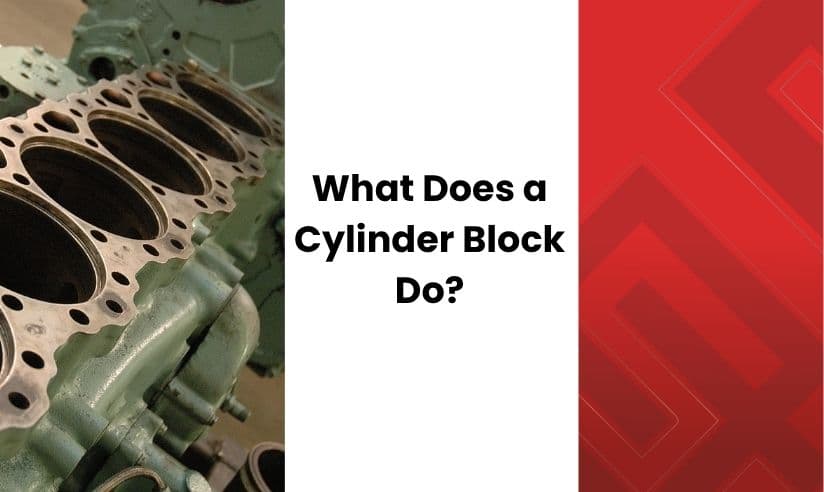
The cylinder block is the main casting of the engine. Everything else the head, the crankshaft, the pistons, the ancillaries attaches to it or sits inside it. The cylinder bores, oil galleries, coolant passages, and bearing housings are all machined into the same piece of metal. There's no separating them.
In Yanmar and Kubota diesel applications, the block is cast iron. The weight varies quite a bit depending on displacement. A 3TNV88 block is a manageable pull. A larger 4TNE98 is a different job. Both are machined to tight tolerances and built to last a long time under load, assuming the maintenance history is there.
What is the purpose of a cylinder block?
It fixes the engine's geometry. Bore spacing, deck height, crankshaft centerline, head bolt pattern all of it comes from the block. If those dimensions shift, nothing else you replace will fix the problem. A warped block means the head gasket won't seal properly regardless of the gasket you use. A cracked block means compression is going somewhere it shouldn't. You can rebuild everything around a bad block and still end up with a bad engine.
This is why block condition is usually the first thing a competent technician evaluates, not the last.
Importance of the cylinder block
The block is almost always the most expensive component in a rebuild decision, and it's the one that determines whether rebuilding makes sense at all. Bore wear past the service limit means sleeving or replacement. Deck surface distortion from overheating means resurfacing or scrap. Cracks from freeze damage or hydraulic lock those are case-by-case, and the answer isn't always what the owner wants to hear.
Yanmar and Kubota engines work hard. A 3YM30 running sustained RPM in a marine application for hours at a time puts different thermal load on the block than a V2403 cycling through a full day in a compact excavator. Neither is easy. The blocks are designed for it, but one overheating event or a long stretch of deferred maintenance can do damage that years of normal operation wouldn't.
Parts of the cylinder block
The cylinder bores are the chambers where the pistons travel. Bore diameter, roundness, and surface finish all matter because that's where the rings seal. Worn or scored bores cause blowby and oil consumption, and this is typically one of the first measurements taken when an engine comes apart.
At the base of the block are the crankshaft main bearing journals machined seats where the crankshaft sits and rotates. If these are out of round, the bearings wear unevenly and the crankshaft can follow.
Coolant passages run through the block around each cylinder, carrying water from the pump through the hottest zones and up into the head. Oil galleries run alongside them, distributing pressurized oil to the main bearings and other moving surfaces. Both need to be clean. Blocked galleries from sludge are a more common failure cause than most people expect.
Many diesel blocks, including most Yanmar designs, use cylinder liners rather than machining the bore directly into the casting. Wet liners sit inside a coolant jacket and contact the coolant directly. Dry liners are pressed in without that contact. The practical difference matters at overhaul: wet liner engines generally allow liner replacement without machining the block, which can simplify the rebuild considerably.
At the top is the deck surface the flat face where the head gasket seats. Even minor distortion here breaks the seal. A few thousandths of an inch across a long block is enough.
What are types of cylinder blocks?
Material comes first. Cast iron handles high combustion pressure and heat well, machines predictably, and can be repaired by welding or sleeving. Aluminum saves weight but is less forgiving under continuous load and harder to repair when damaged. For industrial diesel, cast iron is the default for good reason.
Cylinder arrangement varies by engine size and application. Inline blocks put all cylinders in a single row, which is the standard layout for most small and mid-sized industrial diesels the Yanmar 3TNV88, the Kubota V2403, most of the engines you'll encounter in compact equipment. V-type blocks split into two banks at an angle and appear in larger displacement engines where an inline layout wouldn't fit the chassis. Opposed layouts exist but are rare in diesel industrial applications.
Liner construction also varies. Dry liner blocks press liners in without coolant contact simpler sealing, common in smaller engines. Wet liner blocks require careful O-ring sealing at the liner base to keep coolant out of the crankcase, but they make bore replacement at major service intervals much more straightforward.
Some blocks have a closed deck, where the water jacket is fully enclosed at the top. This adds rigidity around the bores under high cylinder pressure. Open deck designs leave the jacket open at the top, which can aid coolant flow but gives up some structural stiffness.
What are functions of the cylinder block?
The block and head together form the combustion chamber the block supplies the bore walls, the head closes the top. Any failure in that seal means combustion pressure escapes before it can do useful work.
Inside the bore, the piston needs a precise, straight path to travel. Any taper or out-of-round condition breaks the ring seal and leads to blowby. The main bearing housings at the base of the block locate the crankshaft and take the load from every power stroke.
Running through the casting are two separate fluid circuits: the coolant passages that keep combustion heat from damaging the metal, and the oil galleries that keep every moving surface lubricated. Neither is optional, and neither functions well when neglected.
Everything external the gearbox, engine mounts, ancillary components bolts to the block. It's the reference point the rest of the drivetrain is built around.
Cylinder block parts for Yanmar and Kubota engines
When a block failure leads to overhaul, part quality matters for how long the repair holds. Sensei Spare Parts carries Yanmar and Kubota engine components cylinder liners, overhaul kits, pistons and rings, and complete engines across marine, construction, generator, and agricultural applications. If you're working through a rebuild or identifying parts for a specific model, get in touch.